3D Printing vs Injection Molding for Small Batches

“Should I 3D print or injection mold?” is one of the most common questions we get from Charlotte, NC businesses planning a production run. The answer isn’t always obvious, and choosing wrong can cost you thousands of dollars and weeks of wasted time.
The short version: 3D printing wins on small quantities and design flexibility, injection molding wins on high volumes and per-unit cost. But the break-even point between them is where most businesses need guidance. Let’s dig into the real numbers.
The Fundamental Cost Difference
Injection molding and 3D printing have opposite cost structures:
Injection molding has high upfront costs and low per-unit costs. You’re paying for mold design, mold fabrication (typically $5,000-$50,000+ depending on complexity), and setup. Once the mold exists, each part costs pennies to a few dollars.
3D printing has zero tooling costs and moderate per-unit costs. Every part costs roughly the same whether you’re making one or one hundred. There’s no mold to design, no minimum order, and no setup charge.
The Break-Even Analysis
Let’s walk through a real example using a medium-complexity enclosure roughly 120mm x 80mm x 40mm:
| Cost Factor | 3D Printing (PETG) | Injection Molding |
|---|---|---|
| Tooling/mold cost | $0 | $12,000 |
| Per-unit cost | $18-25 | $2-4 |
| Lead time to first part | 2-3 days | 6-10 weeks |
| Minimum order | 1 unit | Usually 500+ |
With these numbers, the break-even point falls at roughly 600-750 units. Below that, 3D printing costs less in total. Above that, injection molding’s low per-unit cost makes up for the tooling investment.
For simpler parts, the break-even might be as low as 300-500 units. For complex parts with expensive molds, it could reach 1,500-2,000 units.
Hidden Costs That Shift the Equation
- Design changes after molding: Modifying an injection mold costs $1,000-$5,000+ per change. With 3D printing, you update the CAD file and reprint at zero additional tooling cost.
- Inventory risk: Injection molding’s minimum orders mean you might produce 1,000 units when you only need 200. If demand drops, those extra units become waste.
- Time cost of waiting: A 6-10 week mold lead time means delayed revenue. If you could have started selling 8 weeks earlier with 3D-printed parts, that’s real money left on the table.
When 3D Printing Is the Clear Winner
Choose small-batch 3D printing when:
- Quantity is under 500 units. No tooling cost means your total spend is lower.
- Your design isn’t finalized. 3D printing lets you iterate without throwing away a mold.
- You need parts now. A Charlotte, NC manufacturer waiting 8 weeks for tooling is losing production time. 3D-printed parts can ship within a week.
- You have multiple product variants. Customization is free with 3D printing.
- The product lifecycle is short. Seasonal products or limited editions don’t justify permanent tooling.
When Injection Molding Is the Clear Winner
Choose injection molding when:
- Quantity exceeds 2,000+ units and your design is stable.
- Material requirements are specific. Some engineering-grade plastics are only available through injection molding.
- Surface finish is critical. Injection-molded parts have smoother surfaces without layer lines.
- Cycle time matters. Injection molding produces parts in seconds per unit.
The Bridge Manufacturing Strategy
Smart Charlotte, North Carolina businesses are using both technologies in sequence, and it’s one of the most cost-effective product launch strategies available.
Phase 1: Prototype with 3D printing. Use rapid prototyping to validate your design quickly and cheaply.
Phase 2: Launch with 3D-printed production parts. Start selling with small-batch 3D-printed parts while your injection mold is being built. This generates revenue and real customer feedback before you’ve committed to a final design.
Phase 3: Transition to injection molding. Once you have validated demand and a stable design, invest in tooling with confidence.
This bridge approach means you’re never waiting. You’re selling. And the customer feedback you collect during Phase 2 often leads to design improvements that save you from an expensive mold revision later.
Material Considerations
A common concern is whether 3D-printed parts can match injection-molded performance. In many cases, they can:
- PETG offers chemical resistance and toughness comparable to many injection-molded consumer products
- ABS/ASA provides heat resistance and mechanical properties similar to injection-molded ABS
- Nylon delivers strength and wear resistance suitable for demanding functional applications
Where 3D printing may fall short is in applications requiring glass-filled engineering resins, extremely tight tolerances (under 0.1mm), or cosmetic surfaces that must match injection-molded quality exactly. For these cases, injection molding remains the right long-term choice, but 3D printing can still serve as your bridge to get there.
Charlotte Manufacturing Context
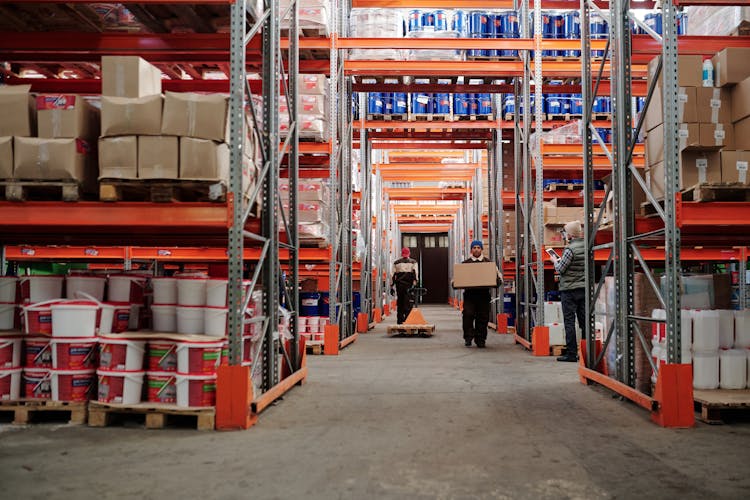
The Charlotte and Lake Norman, NC area has a strong injection molding and plastics manufacturing presence, which means local businesses have access to both technologies without shipping parts across the country. This proximity makes the bridge manufacturing strategy particularly practical. You can work with a local 3D printing partner for prototyping and initial production, then transition to a local injection molder when volumes justify it.
Several Charlotte-area manufacturers use 3D printing not just for parts but for the tooling and fixtures that support their injection molding operations: mold inserts, assembly jigs, and quality inspection gauges. This dual-use approach maximizes the value of both technologies.
Making the Decision
Here’s a quick framework:
- Under 200 units: Almost always 3D print
- 200-1,000 units: Analyze total cost including hidden factors; 3D printing usually wins
- 1,000-2,000 units: Break-even zone; depends on part complexity and design stability
- Over 2,000 units with stable design: Injection molding likely makes sense
If you’re unsure which approach fits your project, send us your part files and quantity requirements. We’ll run the numbers for your specific case and give you an honest recommendation, even if that recommendation is injection molding. Our goal is to help Charlotte, NC businesses make the right manufacturing decision, not to sell 3D printing where it doesn’t make sense. We offer local delivery and pickup for businesses throughout the Charlotte metro area.
Related Articles
Waterproofing 3D Prints: Methods & Materials
Learn proven techniques to make FDM 3D printed parts waterproof for outdoor and liquid-contact applications.
3D Printing Validation Testing Guide
Master validation testing for 3D printed parts with dimensional checks, strength tests, and material verification methods.
3D Printing Support Structures Explained
Master support structures in 3D printing to reduce costs and improve part quality for your business projects.