
Photo by Jakub Zerdzicki on Pexels
Color Consistency in Batch 3D Printing

You approve a prototype in a deep blue, order 200 units, and the batch arrives with parts that look like three slightly different shades. Nothing is technically wrong with any single part, but the set looks inconsistent. Color consistency in 3D printing is one of the most overlooked specifications in batch orders, and it matters most when parts are customer-facing, sold at retail, or displayed together.
This post explains why color drifts in FDM printing, what you can control when ordering, and how to write a color spec that gets you the result you expect.
Why Does Color Vary in FDM Parts?
Injection molded parts get their color from masterbatch pigment mixed at a controlled ratio. FDM filament works on a similar principle, but there are more variables between the spool and the finished part.
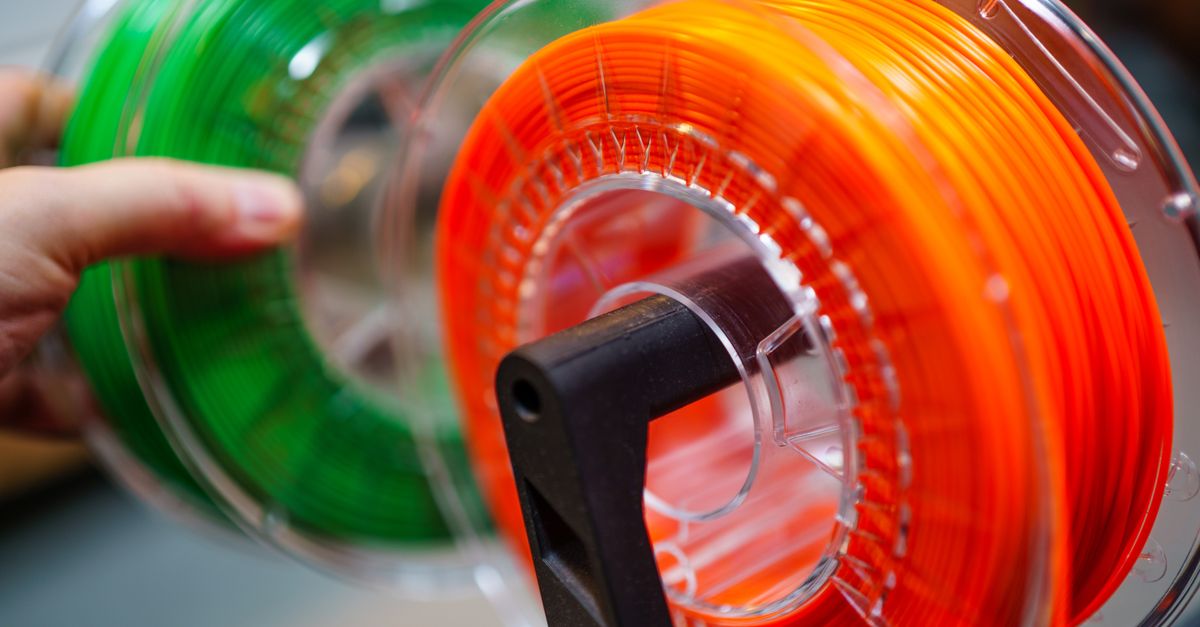
Filament lot variation. Filament manufacturers produce colors in batches, and pigment concentration, base resin, and additive packages can differ slightly from one production lot to the next. Two spools labeled “Royal Blue” from the same brand can look different side by side, especially in darker or more saturated colors. This is the single biggest cause of mismatched batches.
Print temperature and cooling. Nozzle temperature, part cooling fan speed, and cooling rate all affect how a filament looks. Hotter extrusion can slightly darken or dull some colors. In PETG, cooling influences surface gloss and translucency. Specialty filaments such as silk or matte formulations are even more sensitive, because their finish depends on how the surface solidifies.
Layer height and surface texture. Layer lines scatter light. A part printed at 0.28 mm layers will often look lighter and less saturated than the same part at 0.12 mm, because the rougher surface reflects light differently. If your prototype was printed at one layer height and production at another, the color can appear to shift even with the same spool.
Lighting and viewing conditions. Two colors that match under shop lights can look different under warm retail lighting or daylight. This effect, called metamerism, is common with plastics and is not specific to 3D printing, but it surprises people who approve colors on a screen.
Why Screen Colors Do Not Translate Directly
A hex code or RGB value describes light emitted from a display. A printed part reflects light, and its appearance depends on the plastic’s opacity, sheen, and surface texture. Even pigment-matched Pantone references are approximations when applied to FDM filament, because filament manufacturers offer a fixed palette rather than mixing to an arbitrary color target.
In practice, this means FDM color selection works best as a choice from available filament colors, not a precise match to a custom brand color. If your brand color is critical, there are better routes, which we cover below.
Photo by Mikhail Nilov on Pexels
How Do You Get Consistent Color Across a Batch?
Consistency is mostly a planning and process problem. These practices make the biggest difference.
Run the entire order from the same filament lot. For small-batch work, the best approach is to confirm that the full quantity will be printed from filament of the same production lot, or at minimum the same purchase. If a batch needs more material than a single spool, ask how spools are matched. This is a reasonable question for any provider, and the answer tells you a lot about their process. Our small-batch production workflow is built around planning material needs up front for exactly this reason.
Lock the print profile. Layer height, nozzle temperature, cooling, and print speed should be identical between the approved sample and the production run. Changing any of them can alter the look. Treat the approved sample as the reference and document its settings.
Approve a physical sample from the actual material. A render or a photo is not a color approval. Ask for a printed sample in the exact filament and layer height you plan to use, and evaluate it under the lighting where the finished parts will live. For corporate awards and promotional items, this one step prevents most disputes.
Keep one batch, one printing window when possible. Printing a whole run in a single window, rather than spreading it over weeks, reduces the chance of a filament lot change midway. This is one reason batch ordering is often more predictable than repeated small reorders. For more on how quantity affects cost and planning, see our guide on batch size economics.
What About Reorders Months Later?
Reorders are where color drift most often appears. The original spool is gone, the filament manufacturer may have adjusted a formulation, and the new batch may not match what you received the first time.
There are a few ways to manage this:
- Order a buffer. If you know you will need replacement parts later, consider producing extra units in the initial run and storing them.
- Keep a physical reference. Save one approved part as a color standard and compare reorders against it.
- Allow tolerance for non-visible parts. Internal components, fixtures, and hidden brackets rarely need color matching. Reserve strict color control for visible parts.
- Use finishing to unify the look. If visible parts must match across production dates, paint can override filament variation entirely.
The same logic applies to digital file management. Recording the exact material, color, and print settings with each order is a form of version control for your print files and makes reorders far more predictable.
When Is Painting Better Than Filament Color?
If your color requirement is strict, such as a specific brand color, painting is often the more reliable route. A painted finish decouples the final appearance from filament lot variation and lets you target a specific paint color. It also allows a uniform sheen across parts printed in different batches.
The tradeoff is added labor and cost. Sanding, priming, and painting each part adds time, and the quality depends on surface preparation. Our post on 3D print finishing standards covers what a professional finish involves, and post-processing 3D prints like a pro explains the steps in detail.
A sensible rule of thumb:
- Filament color only: best for functional parts, internal components, prototypes, and cases where several nearby shades are acceptable.
- Filament color plus light finishing: good for retail items and displays where parts are seen together but exact brand matching is not required.
- Painted finish: best for strict brand colors, premium awards, and anything photographed or shown in marketing.
Does Color Affect Material Performance?
Yes, in ways that matter for real applications.
Heat absorption. Dark parts absorb more solar energy than light ones. A black PLA part left on a dashboard or in direct sun can reach temperatures where it softens, while a white part in the same spot stays cooler. If parts will see sun exposure, color choice is a functional decision, and material choice matters even more. PETG handles heat better than PLA, and ASA is designed for outdoor UV exposure. See our PETG guide and ASA guide for the details.
Pigment and printability. Different colors from the same filament line can print slightly differently, because pigments and additives affect melt behavior and surface finish. Strength differences between colors are usually small, but they can show up in demanding functional parts. If a part is load-bearing, test it in the actual color you plan to use rather than assuming results from another color carry over.
UV fading. Many pigments fade over time with sun exposure, and PLA is not designed for long-term outdoor use. For parts that live outside, color stability is another reason to choose a UV-rated material.
Color Considerations for Specific Applications
Corporate awards and promotional products. Brand color matters most here, and parts are often displayed side by side. Request a physical sample, decide early whether painting is needed, and consider multi-color approaches for logos. Our corporate awards service and custom corporate awards post go deeper on what works.
Tabletop gaming miniatures. Many miniatures are painted by the end user, so a neutral gray or white filament is usually the best choice. Consistency matters less than surface quality. See our tabletop gaming service for more.
Multi-part assemblies. When an assembly includes several printed components, mixing filament lots can produce visible mismatches at seams. Specify that all visible parts come from the same lot, or plan to paint them.
Multi-color and multi-material parts. Parts with multiple colors add complexity, since each color has its own lot and print behavior. Our overview of multi-material 3D printing explains what is possible.
How to Write a Color Spec That Works
A clear color specification takes a minute to write and avoids most problems. Include:
- Material and color name (for example, PETG, black), not just a hex code.
- Finish expectation: as-printed, sanded, or painted.
- Layer height so the surface texture matches your sample.
- Matching requirement: whether parts must match each other, match a reference, or simply be the same general color.
- Viewing environment: indoor, outdoor, retail lighting, or photography.
- Reorder plans, so your provider knows whether future matching is expected.
If you are unsure how to phrase any of this, our RFQ checklist covers what to include when requesting a quote.
Plan Color Before You Print
Color consistency in 3D printing is manageable when you treat color as a specification, not an afterthought. Choose a filament color from what is actually available, approve a physical sample, lock the print profile, and use paint when your requirement is strict. For batches where appearance matters, a few minutes of planning up front prevents the mismatched-shades problem entirely.
Ready to Plan Your Batch?
If you have a batch of parts where color matters, we can help you choose the right material, finish, and approach before anything is printed. We print in PLA and PETG daily and can discuss painted finishes when brand matching is required. Tell us about your project and quantity, and we will help you spec it correctly.
Related Reading
Related Articles
3D Printed Molds and Casting Patterns
3D printed molds and casting patterns let you make silicone, urethane, and thermoformed parts without steel tooling. Here is what works and what does not.
3D Printed Shop Floor Organizers for 5S
3D printed shop floor organizers turn 5S from a poster into a system. See what to print, which materials hold up, and how to design for real use.
Embedding Magnets and Hardware in 3D Prints
Embedding magnets in 3D prints adds function and clean assembly. Learn pocket sizing, pause-and-insert steps, and design rules that work in FDM.